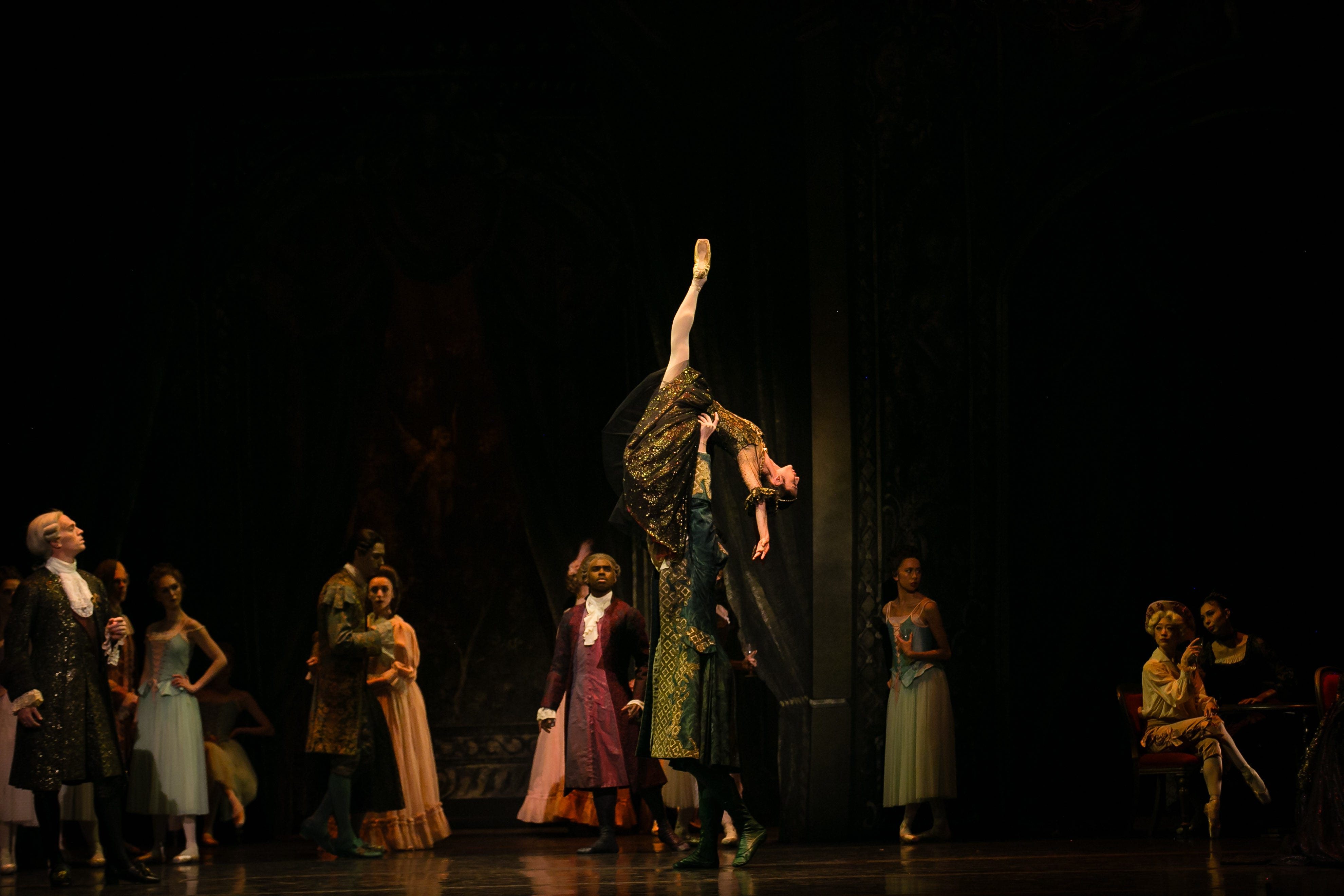
Kenneth MacMillan’s Manon

Review: Australian Ballet, Manon
The Regent Theatre, Melbourne
Reviewed October 11, 2025
Last Friday, the Australian Ballet debuted their second season of Sir Kenneth MacMillan’s Manon (1974). The ballet opened to Australian audiences earlier this year in Sydney, and now returns for Melbourne audiences at The Regent Theatre. Only a few weeks after the Australian Ballet’s premiere of Prism, a neo-classical and contemporary triple bill, the quick turnover to prepare the bodies for a major classical work must have required careful physical maintenance. Interestingly, however, during the Saturday night performance, I was reminded how far from a traditional classical ballet Manon truly is.
Choreographed by former director of both the Royal Ballet and the Deutsche Oper, Sir Kenneth MacMillan (1929-1992), Manon has all the hallmarks of a big ballet like La Dame Aux Camelias or Romeo and Juliet. Historically-inspired narrative, big cast, period costumes, classical score, women in pointe shoes and men in tights. Manon, however, is typical of MacMillan’s efforts towards classical rebellion, endeavouring to move away from the onstage harmony typical of his contemporary Frederick Ashton to emphasize the stage as a place in which real life could happen. This is evident in Manon. It is a highly emotionally charged work, in which classical technique plays a mere supporting role to the drama taking place between the protagonist Manon, her yearning lover Des Grieux, her hothead brother Lescaut, and the slimy Monsieur G.M. The ballet Manon, if anything, is MacMillan’s desire to make classical ballet like a Tennesse Williams play: “It would be nice to go to the ballet and see something as adult and stimulating as ‘Cat on a Hot Tin Roof’”, he is said to have remarked.
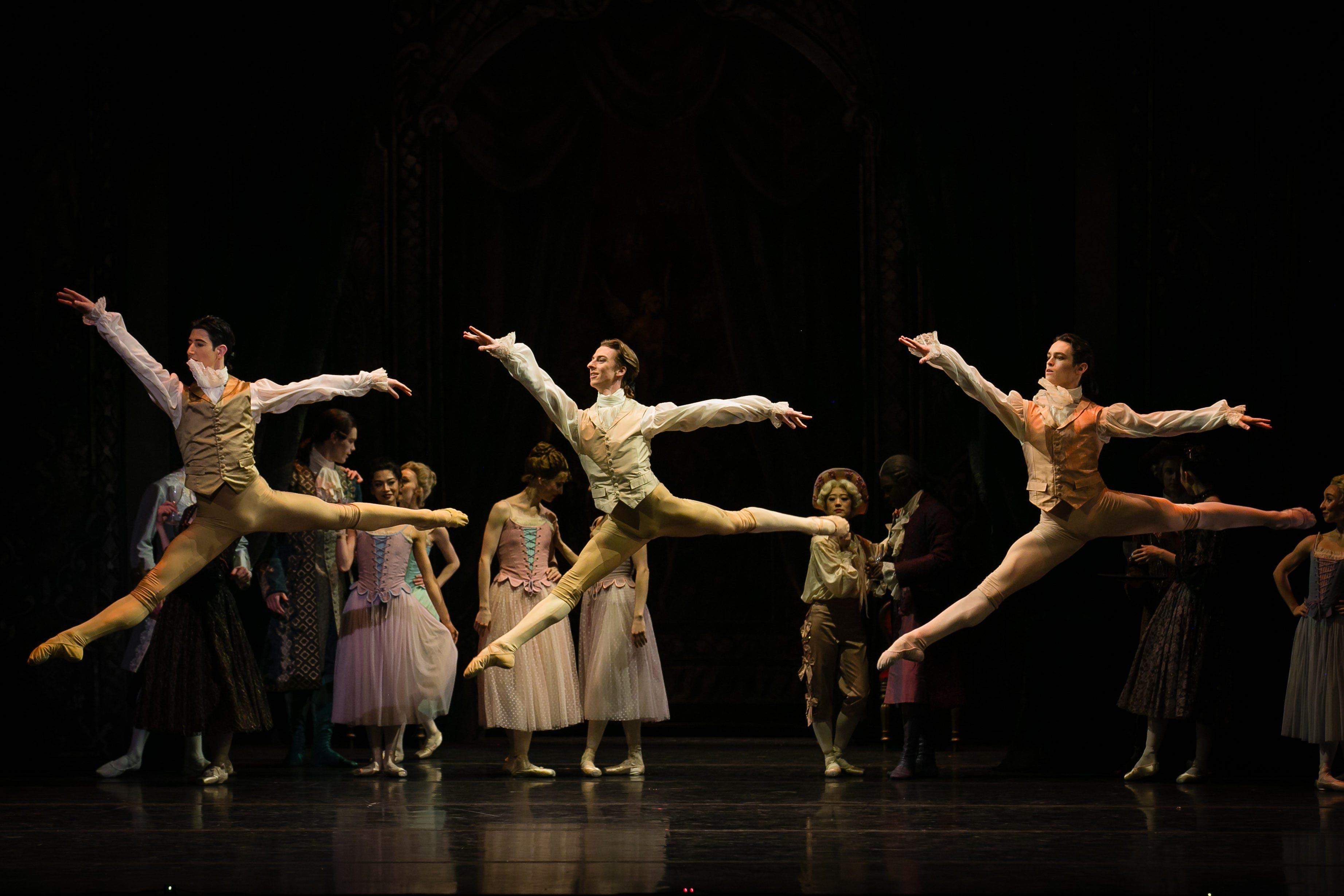
In their performance of Manon on Saturday, the company was strong. Opening the work was Cameron Holmes as Lescaut: cheeky, bombastic, and fiery in the streets of Paris, where we watch his flirtation with his demimonde Mistress, played to technical perfection by Katherine Sonnekus. The company dancers took on the roles of Courtesans, Protectors, and Beggars with attack and energy. Meeting Manon, performed by principal Benedicte Bemet, we observe the ingénue elegance of a young woman caught up in a dark world, encouraged to play the courtesan game for financial reward. With coy glances and neurotic footwork, Bemet was every bit the starry-eyed femme fatale. The romantic bedroom pas de deux with the noble Des Grieux, performed by principal Chengwu Guo, brought to life the tenderness of love in a hopeless place, with whimsical chaînés, audacious grand battement penchés, and breathless moments of suspension. The pas de deux, however, also revealed the genuine challenges within MacMillan’s unnatural choreography.
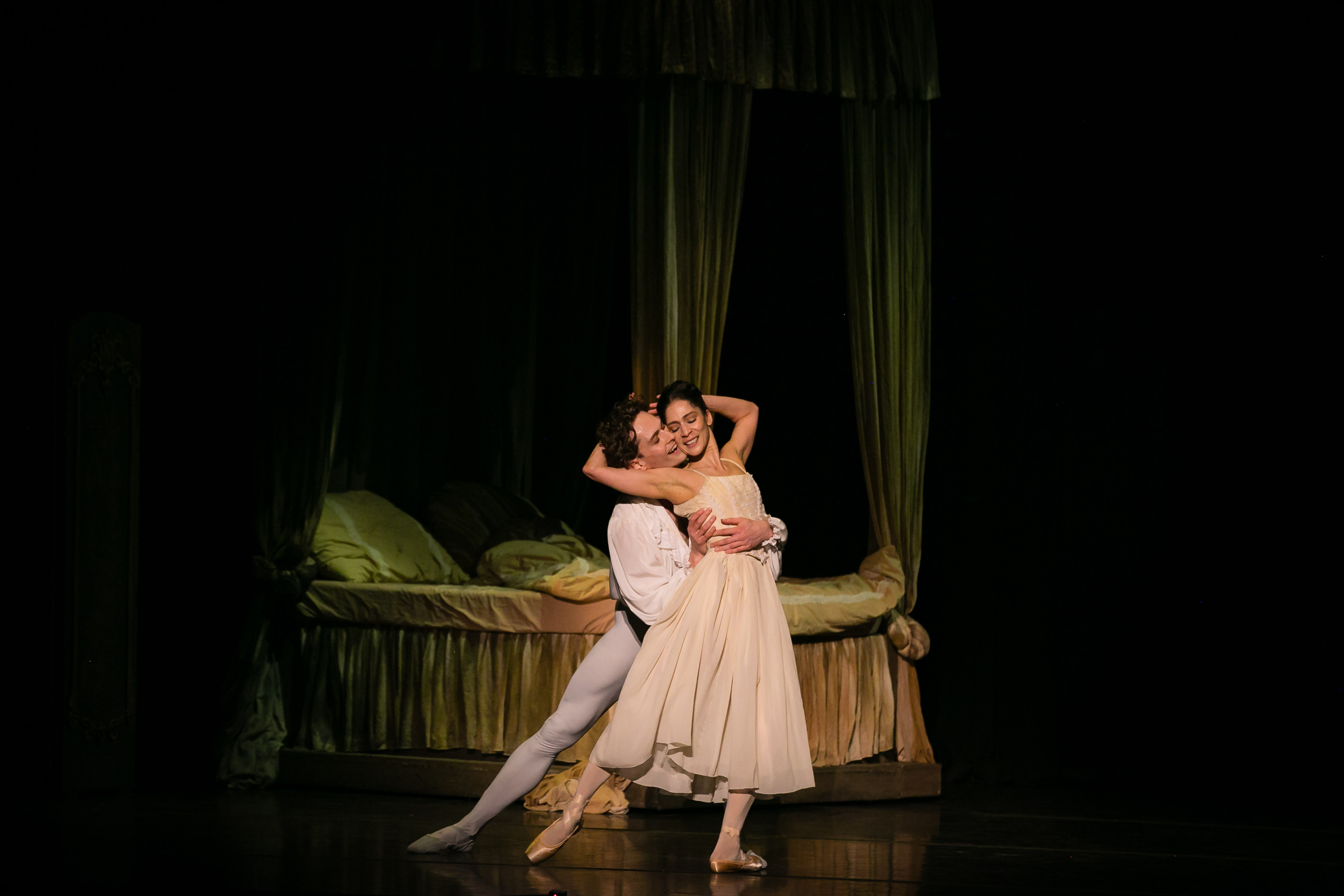
Manon is a classical ballet that chooses contradictory forces, dynamic movements, and seemingly impossible lifts to describe the inner turmoil experienced by its characters. In fact, one might even go as far as to surmise that MacMillan intentionally made the choreography of Manon difficult so that dancers might be forced to let go a little and feel. In confronting Manon’s OTT technical demands, MacMillan makes space to leave pursuit of technical perfection to the traditional ballets and just go for it. Rather than a high point of classicism, Manon is an opportunity for dancers to bring their fullest selves, real emotions, and a revolutionary attitude befitting an 18th-century story to the stage.
In the Australian Ballet’s performance, there were undoubtedly moments of explosive emotion. The seedy threesome between Manon, Lescaut and Monsieur GM was conveyed as the dark but all but too familiar transaction that it is. Lescaut’s drunken solo and stumbling pas de deux with his Mistress struck the perfect balance between technique and theatre, and Holmes played inebriation convincingly (not easy to do). Chengwu’s destraught Nijinksy-esque solo in Act II was heartbreaking, and Jarryd Madden’s violent performance as the Jailor and rape of the suffering Manon was painful to watch. For many of the narrative’s dramatic moments, however, the difficulty of the choreography distracted from connection between principal characters, making the narrative as a whole harder to follow and less engaging.
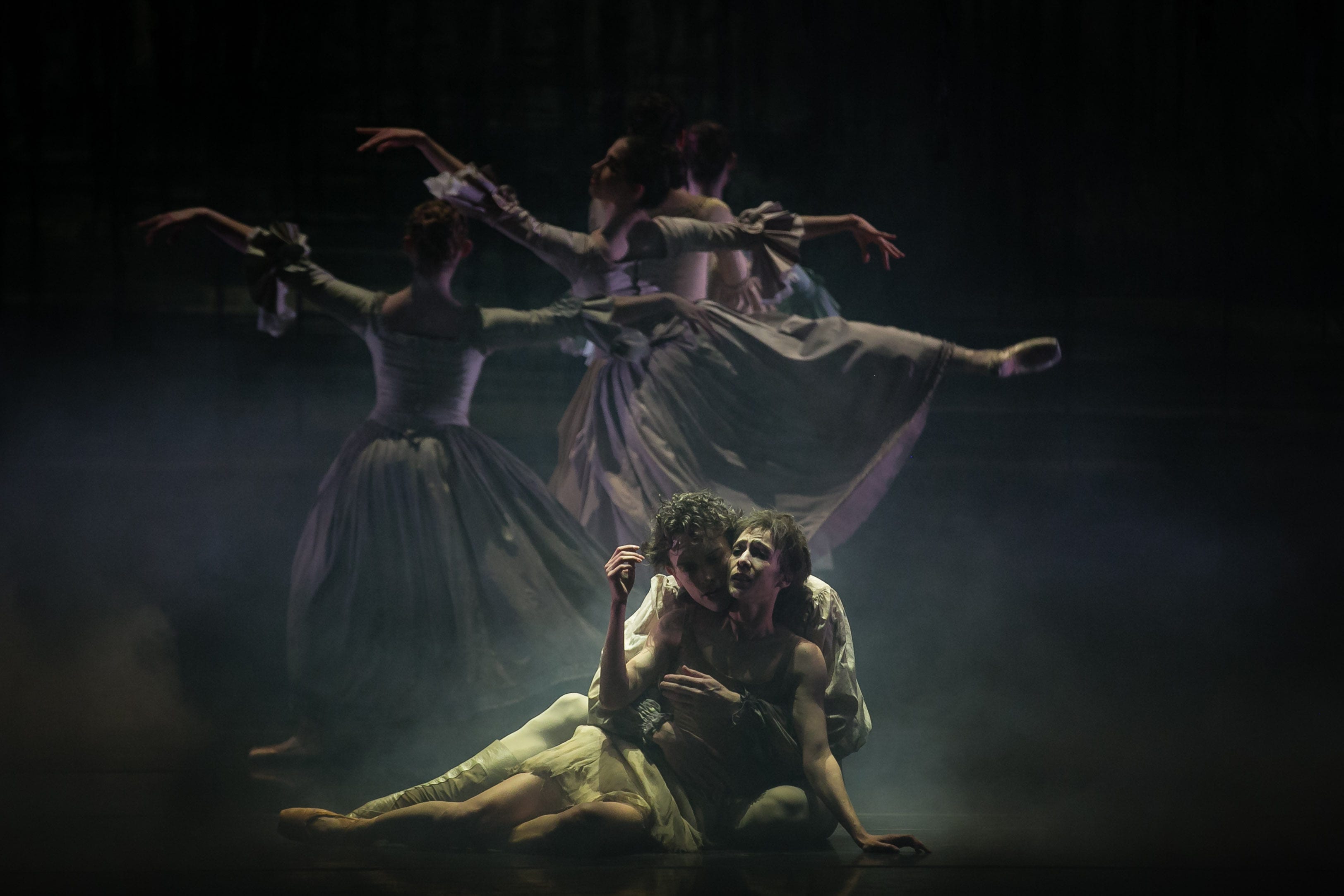
This may be more the fault of MacMillan’s staging than of the Australian Ballet’s theatricalities. Manon, for all its sumptuousness of set, costume, and story, is not MacMillan’s more coherent work. The journey of the titular character Manon, based on a powerful seductress, who, though young, is well aware of her charms and wields them knowingly, is reduced in MacMillan’s ballet to a passive object of the desires of several salacious males. Scenes are jumped between quickly, missing key moments of explanation or resolution, and the final dream scene in Manon’s dying moments is too kitsch to be taken seriously. Nonetheless, when viewed as an abstract work in the vein of Bauschian dance theatre, in which choreography is merely a portal to baser human truths, MacMillan’s strenuous choreography and violent drama finds redemption. Only, however, if technique plays a supporting role to emotional expression.
Now that the dancers of the Australian Ballet clearly have the technique necessary for Manon down pat, perhaps their next point of focus should be to relax into their characters and really tell the story: particularly when it is one as continually important as Manon with its themes of love, morality, sex, desire, and money. It is only this theatrical embodiment of timeless stories and characters that keeps a ballet like Manon relevant and captivating for contemporary audiences.